Harvard and the American Revolution
1776 at Harvard
At 140 years old at the time of the American Revolution, Harvard—and members of the Harvard community—played an important role in the country’s early history.
During the American Revolution, students were dismissed early and the Harvard campus was turned over to the Continental Army.
Learn more about Harvard during the RevolutionAn original copy
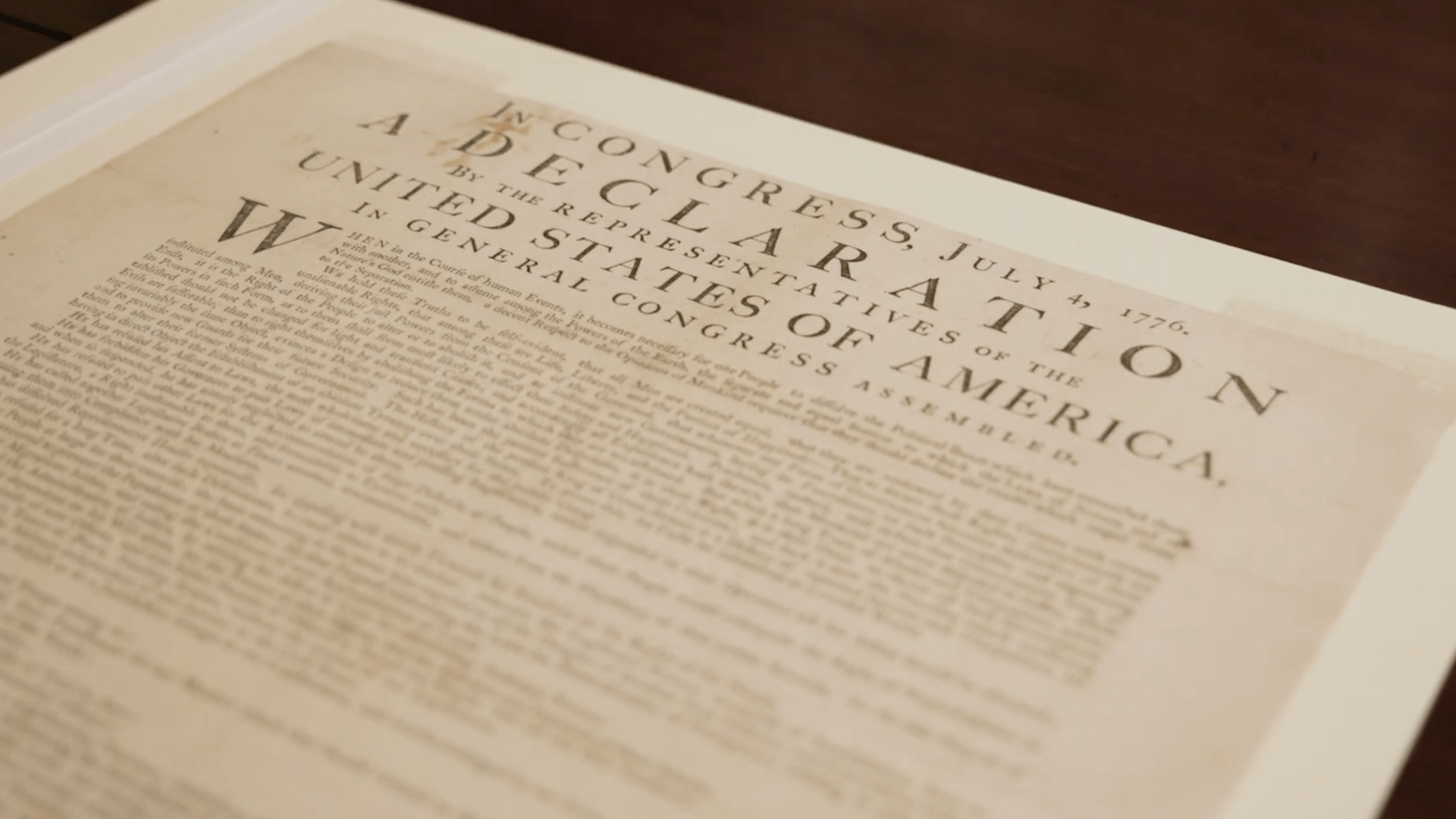
Harvard’s Houghton Library contains one of only a few surviving Dunlap broadside copies of the original Declaration of Independence.
On July 6, 1776, President of the Continental Congress John Hancock sent one of the just-printed copies of the Declaration of Independence to General Artemas Ward, commander of the Continental Army troops in Boston. Hancock’s letter came to Houghton as part of John Hubbard Collection of signers of the Declaration of Independence.
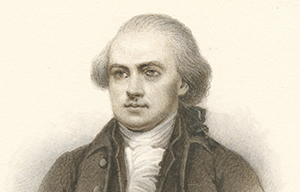
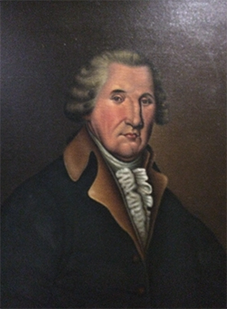
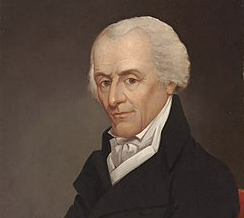
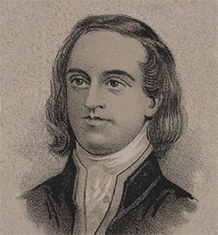
Did you know that eight Harvard alumni signed the Declaration of Independence?
John Adams graduated from Harvard College in 1755.
In a letter relating his thoughts on the way to the Harvard entrance exam, Adams said he was “terrified at the Thought of introducing myself to such great Men as the President and fellows of a Colledge, I at first resolved to return home: but forseeing the Grief of my father . . . I aroused my self, and collected Resolution enough to proceed.”
Samuel Adams received a bachelor’s degree from Harvard College in 1740.
Adams’ parents hoped he would go into the ministry, but while at Harvard he became interested in politics. After graduating, he continued his studies, earning a master’s degree in 1743. In his thesis, he argued that it was “lawful to resist the Supreme Magistrate, if the Commonwealth cannot otherwise be preserved,” indicating his political view of colonial rights.
John Hancock received a bachelor’s degree from Harvard College in 1754.
Twenty years after his graduation, Hancock became Harvard Treasurer. Halfway through his term he left Cambridge for the Continental Congress and stopped providing the required annual financial report, but was unwilling to give up his position at Treasurer. The corporation sent him a letter explaining in detail exactly how he repeatedly failed to meet the job responsibilities. He was replaced as Treasurer in 1777, and his successor spent years trying to restore order to the accounts that Hancock left in chaos.
Elbridge Gerry graduated from Harvard College in 1762. He then went on to receive a master’s degree in 1765, and his dissertation argued that the colonies should resist the recently passed Stamp Act.
In 1786, Gerry acquired a home in Cambridge, Massachusetts built by Harvard graduate Thomas Oliver. This house, called Elmwood, was the family home until the death of Elbridge in 1814. Elmwood has served as the Harvard President’s house since 1971.
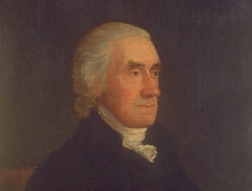
Robert Treat Paine graduated from Harvard College in 1749, and then explored a variety of career paths before ultimately committing to practicing law.
Paine’s involvement in provincial politics began in 1770, when the town of Boston asked him to assist in the prosecution of the Boston Massacre trials alongside his friend Samuel Quincy. At the Continental Congress, Paine, who opposed nearly every measure that was proposed, got the nickname “the objection maker.”
William Ellery graduated from Harvard College in 1747.
Benjamin Rush, who wrote “characters” of the men who signed the Declaration of Independence, described Ellery as “a lawyer, somewhat cynical in his temper, but a faithful friend to the liberties of his country.” He added that Ellery didn’t often speak in Congress, but amused himself by writing epigrams on the other members “which were generally witty and pertinent, and sometimes poetical.”
William Williams graduated from Harvard College in 1751.
After the first anniversary of the signing of the Declaration of Independence, Williams recorded his dislike of the celebrations in Philadelphia. He wrote to Jonathan Trumbull, Sr. that the day was “poorly spent in celebrating the anniversary of the Declaration of Independence. A great Expenditure of Liquor, Powder &c took up the Day & Candles thro the City, good part of the night, I suppose.”
William Hooper graduated from Harvard College in 1760. His father hoped he would pursue a career in the clergy, but Hooper decided to go into law instead.
Benjamin Rush, who wrote “characters” of the men who signed the Declaration of Independence, described Hooper as “a sensible sprightly young lawyer and a rapid but correct speaker.”
A place in history
Colonial North America at Harvard Library
Harvard Library recently completed a 10-year project to digitize all its unpublished 17th- and 18th-century manuscripts and archives related to colonial North America.
Tacky’s Revolt
Professor of American History and African and African American Studies Vincent Brown says that understanding Tacky’s Revolt, the largest rebellion of enslaved people in the 18th-century British Empire, gives context to the American Revolution.
“What to the Slave is the Fourth of July?”
Doctoral student Keidrick Roy discusses Frederick Douglass’ famous 1852 speech, in which Douglass looks at the contradictions between the reality of slavery and the claims of a just society outlined in the Declaration of Independence.
A part of the future
Imagining an alternative America from a Native perspective
Celebrating freedom from Juneteenth to the 4th of July
Faith, social justice, and "certain unalienable rights"